Tuesday, March 10, 2026
Rosebud


Friday, March 6, 2026
My First Lie and How I Got Out Of It

By Mark Twain – Adapted
Mark Twain was a famous American humor writer who often used exaggeration to teach lessons about
human behavior. In the story 'My First Lie and How I Got Out of It,' Twain describes a situation where a
small lie begins to grow bigger and more complicated. Each attempt to fix the lie creates new problems
and confusion. The story humorously shows how difficult it can be to keep track of lies once they start.
1) Why do you think the narrator told the first lie?
2) What happens when the narrator tries to maintain the lie?
3) What lesson do you think Mark Twain is trying to teach?
Were we lied to about George Washington and the cherry tree?!
Today, misinformation can spread quickly through social media, news outlets, and public figures. Read the scenarios below and answer the questions.
Scenario A: A famous athlete said something controversial but the quote has no source
Scenario B: A photo spreads online claiming to show a current event but the image is actually from several years ago
Scenario C: A post shares a shocking statistic about the economy but does not link to evidence
4) What clues suggest these posts might not be trustworthy?
5) What steps could someone take to verify the information?
6) What might happen if thousands of people share misinformation?
Thursday, March 5, 2026
Goldilocks Number
Once upon a time--- November 2005--- someone said a very SCARY number...
What was it? Read Chapter 5 in the book (pgs. 49- 55) to find out.
Monday, March 2, 2026
War With Iran
A major U.S.-Israel attack on Iran targeted the country’s top leaders and missile sites Saturday, following weeks of rising tensions over talks on Iran’s nuclear program. Iran has vowed to retaliate.
1) Who attacked Iran and when?
2) Why was Iran attacked, according to this story?
3) How has Iran responded?
4) What have been some of the reactions of world leaders to the U.S.-Israel attacks on Iran?
5) Where did Iran strike in response to being attacked?
6) Do you think a strong case has been made for the U.S.'s attack on Iran? Explain.
7) What do you think should happen now that Iran's Supreme Leader Ayatollah Ali Khamenei has been killed?
8) "The lives of courageous American heroes may be lost, and we may have casualties. That often happens in war," Trump said in his speech following the attacks. Do you think the U.S. should have attacked Iran? If you are not sure how to answer this question, what further information might you need?
It turns out that Iran has a pretty long history of unrest in order to put power in the hands of the people, and the most recent revolution in 1979 was, at least at first, not necessarily about creating an Islamic state. It certainly turned out to be about that, but it was initially just about people who wanted to get rid of an oppressive regime.
2) Why was Iran attacked, according to this story?
3) How has Iran responded?
4) What have been some of the reactions of world leaders to the U.S.-Israel attacks on Iran?
5) Where did Iran strike in response to being attacked?
6) Do you think a strong case has been made for the U.S.'s attack on Iran? Explain.
7) What do you think should happen now that Iran's Supreme Leader Ayatollah Ali Khamenei has been killed?
8) "The lives of courageous American heroes may be lost, and we may have casualties. That often happens in war," Trump said in his speech following the attacks. Do you think the U.S. should have attacked Iran? If you are not sure how to answer this question, what further information might you need?
It turns out that Iran has a pretty long history of unrest in order to put power in the hands of the people, and the most recent revolution in 1979 was, at least at first, not necessarily about creating an Islamic state. It certainly turned out to be about that, but it was initially just about people who wanted to get rid of an oppressive regime.
Thursday, February 26, 2026
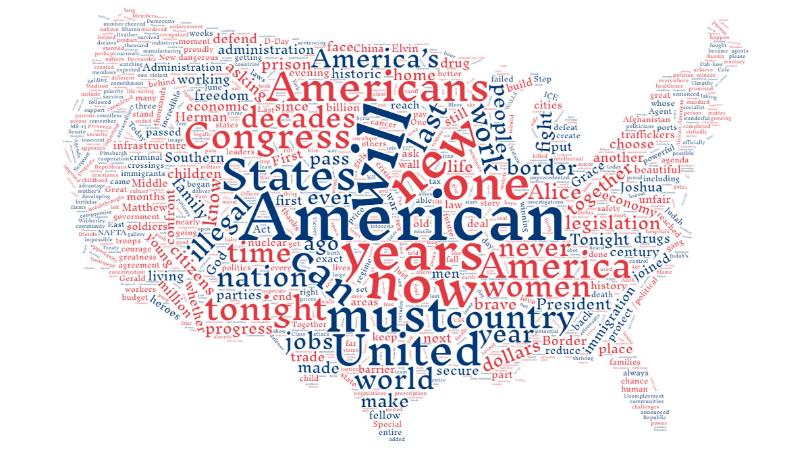
State of the Union
Say what? What words or themes did the President repeat most often?

Tuesday, February 24, 2026
Birds On a Wire

Brooke Gladstone compares the press to blackbirds perched on a wire, saying, “one bird will fly to another wire, and when it doesn’t get electrocuted, all the birds will fly to that other wire.”
Senator Eugene McCarthy came up with that; but what does it mean?
If 'courage and caution' are the 'yin and yang' of journalism, when can a little bit of caution a good thing?
Thursday, February 19, 2026
MObituaries
At ObitCon, members of the Society of Professional Obituary Writers talk about the privilege of honoring lives well-lived. Mo Rocca reports on the gathering of obit writers (where they hand out their annual awards ceremony, the Grimmys), and introduces the second season of his podcast, "Mobituaries."
According to James Loewen in his book Lies My Teacher Told Me: Sasha and Zamani are two aspects of time as expressed in some Eastern and Central African cultures. Sasha are spirits known by someone still alive, while Zamani are spirits not known by anyone currently alive. The recently departed whose time overlapped with people still here are the Sasha, the living dead. They are not wholly dead, for they live on in the memories of the living ... when the last person knowing an ancestor dies, that ancestor leaves the Sasha for the Zamani, the dead. As generalized ancestors, the Zamani are not forgotten but revered.
Your assignment: write your own Obituary. Assume you live to be at least 80 years old. What will you have accomplished? Who will you leave behind? What will your legacy be?
Wednesday, February 18, 2026
Canis Journalisticus
If journalists really are like dogs, 'barking at anything that moves', then Helen Thomas agrees.
Reporters are celebrated not because of the truth of their story, but according to whether their story fits the public's mood.
Without a free press doing its job as a journalistic watchdog, citizens are left to guess if their elected officials are doing their jobs, or if the people they have entrusted have earned that trust.
Friday, February 13, 2026
Does Secrecy Make Us Safer?

When NSA whistleblower Edward Snowden leaked details of massive government surveillance programs in 2013, he ignited a raging debate over digital privacy and security. That debate came to a head this year, when Apple refused an FBI court order to access the iPhone of alleged San Bernardino Terrorist Syed Farook. Meanwhile, journalists and activists are under increasing attack from foreign agents. To find out the government's real capabilities, and whether any of us can truly protect our sensitive information, VICE founder Shane Smith heads to Moscow to meet the man who started the conversation, Edward Snowden. Watch the episode.
Described by WIRED as “the most wanted man in the world,” Edward Snowden is being sought for leaking top-secret documents that unveiled widespread surveillance programs overseen by the federal government. He currently is hiding out in an undisclosed community in Russia, where he says he goes mostly unrecognized.
1) Is Edward Snowden a 'traitor & a coward' or a 'patriotic hero? You decide.
2) What does Tulsi Gabbard, our new Director of National Intelligence, think?
3) Should we have secrets from our Government? Explain.
4) Should our Government have secrets from us? Explain.
5) Where does our right to 'privacy' end and the Government's right to 'know' begin?
1) Is Edward Snowden a 'traitor & a coward' or a 'patriotic hero? You decide.
2) What does Tulsi Gabbard, our new Director of National Intelligence, think?
3) Should we have secrets from our Government? Explain.
4) Should our Government have secrets from us? Explain.
5) Where does our right to 'privacy' end and the Government's right to 'know' begin?
7) Do you agree or disagree with this decision? Is it biased?
8) If you were directing the movie who would you choose? Why?
Watch an Oscar nominated documentary about Snowden .
Watch the pivotal moments in 'Citizen Four' and learn how they came to life on the screen.
Should Edward Snowden be 'pardoned?'
Wednesday, February 11, 2026
Existential Angst: Pentagon Papers
2) Why did Daniel Ellsberg copy the report? Why did journalist Neil Sheehan feel it was necessary to publish the study?
3) What do you think is the more important issue, that government documents were leaked or that the US government hadn’t been totally honest in its assessment of the Vietnam War?
4) What was President Nixon’s original thought about the publication of the study? Why did he eventually change his mind?
6) Why do you think the Nixon administration planned to go to such extremes to discredit Ellsberg (breaking into his psychiatrist’s office, leaking personal information about him)?
7) Could there have been a justifiable reason for Nixon’s conduct in this matter? What would it be?
8) Were Ellsberg or Nixon justified in their behavior, or did they both cross the line of responsible behavior by government officials? Explain why you think the way you do.
Monday, February 9, 2026
Superbowl Commercials
Thursday, January 29, 2026
What In the World?

Thursday, January 22, 2026
Freedom of the Press

A press that is free to investigate and criticize the government is absolutely essential in a nation that practices self-government and is therefore dependent on an educated and enlightened citizenry.
1) How is our Freedom of Press essential to our Democracy?
2) What does the 1st amendment say about Freeodom of Press?
3) In what ways is our Freedom of Press unique?
4) In what ways has the Press been limited throughout our History?
5) What were the 'Pentagon Papers' and how did they challenge the 1st Amendment?
Wednesday, January 21, 2026
In the Beginning...
...there were no journalists. But in every place written language emerges, you can find publicists.
The ancient Maya civilization of Central America left behind a riddle: an intricate and mysterious hieroglyphic script carved on stone monuments and painted on pottery and bark books. Because the invading Spanish suppressed nearly all knowledge of how the script worked, unlocking its meaning posed one of archaeology's fiercest challenges. Until now.
Friday, January 16, 2026
With Great Power Comes Great Responsibility
This expression has been attributed to everyone from Voltaire to Uncle Ben in the Spider-Man comic book; but what does it mean?

Monday, January 12, 2026


Thursday, January 8, 2026
What Is News?

What makes one thing worth reporting, while another thing is not? We offer a test for news which can work in all societies. We consider what makes some news stories stronger than others. Finally, we look at how news comes to journalists, and the areas of life where we most often find it.
Wednesday, January 7, 2026
Year In Review

1) What were the BIG headlines in 2025 (name at least 3)?
2) What made these events Headlines?
3) What similarities or differences did these events share?
4) Which do you think is the most important? Least? Why?
5) What predictions can you make about the events we will likely study this year?
Subscribe to:
Comments (Atom)