What makes one thing worth reporting, while another thing is not? We offer a test for news which can work in all societies. We consider what makes some news stories stronger than others. Finally, we look at how news comes to journalists, and the areas of life where we most often find it.
Q. How can we ensure that our development as moral and social animals keeps pace with our rapidly evolving communications technology?
A. By playing an active role in our media consumption, trusting reporters who demonstrate fairness and reliability over time, offering corrections when they get something wrong, and when we care enough--reading the original documents they worked from.
Mere seconds before the Earth is to be demolished by an alien construction crew, journeyman Arthur Dent is swept off the planet by his friend Ford Prefect, an alien researcher penning a new edition of "The Hitchhiker's Guide to the Galaxy."Do movie trailers appeal to our 'deep' or 'hyper' attention?
Douglas Adams cult classic may have been the stuff of Science Fiction in the 1970s, but one can't help compare his fictitious guide to existing modern-day technology. Never before have we had access to so much information at our fingertips. So why is it we seem to know so little?
You can see it when you look out your window... when you turn on your television... when you go to work. It is the world that has been pulled over your eyes to blind you from the truth. The truth that like everyone else you were born into a prison that you can not smell or taste or touch. A prison for your mind. More precisely the prison OF your mind.
When journalist Eric Weiner traveled the world to discover what made some countries happier places than others, he found one primary common denominator among the happiest. The essential ingredient was trust. The happiest countries are those in which people feel they can trust their government, trust social institutions, and trust their neighbors (see The Geography of Bliss, by Eric Weiner).
Trust should be easy. We do it every day. We trust the other drivers on the road to stop when their light turns red. We trust that the author, reporter, expert and correspondent whose work we read is giving us truth about the world as it is, and how it's likely to be. We relax in that trust and feel informed...that is, until a fact checker comes along who challenges some part of the official version. Politicians not completely trustworthy? We've learned to live with that. So we've come to rely on the insights and forecasts of experts...until a master researcher like Phillip Tetlock demonstrates that the predictions of "experts" are about as correct as chance. Moreover, with regard to media experts and opinionizers, the more confident an expert seems (Rush Limbaugh, anyone?), the more convincing he is, and the less likely he is to be correct.
In Chapter 9 Brooke proposed that reporters aren't supposed to make the world better.
Their job is to tell us what is going on, so WE can make it better...
Would you trust them more if you knew more about them?
Video conferencing is pulling back the curtain on our private lives, as our friends & colleagues finally get a peek into our homes. Correspondent Mo Rocca talks with designer Jonathan Adler, fashion commentator Simon Doonan, and New York Times critic-at-large Amanda Hess about what Zoom is divulging about us.
1) What can we learn about our reporters and celebrities by 'peeking' into their living rooms and offices?
2) Do you trust them more or less? Why?
3) What is in your 'Zoom' background and what does it 'disclose' about you?
A pioneer broadcast journalist who began his distinguished career as a wire service reporter, Cronkite was a longtime champion of journalism values who was often referred to as the most trusted man in America.
By the mid-1950s more than half the nation's living rooms have a TV set, which serves as a kind of national mirror. It reflects a populace that is white, Christian, and middle-class. It has no accent. It defines normal. It defines America.
When Walter Cronkite ends his CBS newscast with his rock-solid assertion, 'And that's the way it is,' it's a sweet finish to his nightly suppertime slice of reality. Facts, unseasoned and served deadpan. (Gladstone, pg. 103)
If the highest law of journalism is 'to the tell the Truth and shame the devil' then the Golden Age of Objectivity was the 1950s. The 1951 government film 'Duck and Cover' advised on what to do if the see the flash of a nuclear bomb. Fear of Communism and the threat of atomic war moved us into the 'donut hole' of consensus.
Historian Daniel Hallin uses donuts as a metaphor for the news. (Hallin, 2010) The donut hole is the ‘sphere of consensus;’ unquestionable values and unchallengeable truths. The donut itself is ‘legitimate controversy.’ This is the literal ‘sweet spot’ where undecided issues can be debated and discussed. Outside the donut is the ‘sphere of deviance’ reserved for opinions outside the mainstream of society.
Objectivity emerged as a selling point in American Journalism when the price of a newspaper dropped to a penny. In 1833 The New York Sun slashed the price of their paper to multiply readership and increase advertising. Profits soared.
Yet all around their was a grinding, dehumanizing poverty reflected in the eyes of these 'newsies' selling papers on city streets. Before WWI people viewed the world as being cruel but rich with opportunity. Horatio Alger novels told stories of how the humblest orphans could ascend into the middle class through hard work.
This view changed following the war. As damaged soldiers returned home with stories and the hideous and meaningless death of millions of young men a deep cynicism sets in and 'Dadaism' is born. Its basic philosophy: everything is meaningless.
On August 6, 1945, a revolutionary new weapon destroyed Hiroshima, a Japanese city of 300,000 inhabitants. Three days later, a second atomic bomb was dropped on Nagasaki. America’s secret super-weapon was lauded for bringing about victory in the Pacific and ending World War II. President Truman’s official announcement included half-truths that shaped the government’s official narrative: “Sixteen hours ago, an American airplane dropped one bomb on Hiroshima, an important Japanese army base.” In fact, the bomb was aimed at Hiroshima’s city center for maximum psychological effect; the army base on its outskirts escaped much damage.
Eighty years after the devastating atomic bombings that ushered in the nuclear age, Bombshell explores how the U.S. government manipulated the narrative about the atomic bombings of the Japanese cities Hiroshima and Nagasaki. Through propaganda, censorship and the co-opting of the press, the government presented a benevolent picture of atomic power, minimizing the horrific human toll. Bombshell sheds light on the efforts of a group of intrepid reporters to let the world know the truth.
Many journalists were 'embedded' with the troops in WWII. The legendary Ernie Pyle from western Indiana wrote columns on their grinding ordeal and uncomplicated courage. Armed only with a typewriter, Pyle personalized war reporting, creating a bridge between the everyday soldier, whom he dubbed GI Joe, and the American populace.
As a roving correspondent for the Scripps-Howard newspaper chain, he earned wide acclaim for his accounts of ordinary people in rural America, and later, of ordinary American soldiers during World War II. His syndicated column ran in more than 300 newspapers nationwide.
At the time of his death he was among the best-known American war correspondents. He won the Pulitzer Prize in 1944 for his spare, poignant accounts of "dogface" infantry soldiers from a first-person perspective. "No man in this war has so well told the story of the American fighting man as American fighting men wanted it told", wrote Harry Truman. "He deserves the gratitude of all his countrymen."
In 1854, London Times reporter William Howard Russel reports on the charge of the British Light Cavalry Brigade in Crimea. He writes of soldiers ill-fed, ill-led, and left on the field to die. Prince Albert is furious. Russell's reporting turns the public against the government, prompting history's first order of military censorship. Henceforth, any reporter who reports information that could be useful to the enemy will be expelled. Russell is hailed as the 'father of war reporting.'
Read both Tennyson's poem and Russel's report for understanding and then answer these questions:
1) Compare and contrast the tone and emotion of Tennyson's poem to William Russel's war report. How did each describe the soldiers? What was their view of leadership/ command? What was their message to the public?
2) What are some ways 19th-century readers might have reacted differently to a poem versus a newspaper report?
3) How does today’s media (TV, internet, social media) shape public opinion about wars?
4) Should war reporters try to stay neutral, or is it okay to take a moral stance? Explain your reasoning.
5) After studying both accounts, do you think the public should see the “heroic” side of war, the “tragic” side, or both? Why?
At its most extreme, bias will drive people away from sources they disagree with and push them to consume only media from outlets that confirm their existing worldviews. In the age of social media, this has become especially true. Because we often surround ourselves with like-minded people as our friends and acquaintances, our social media feeds will often reflect a shared bias. At its most extreme application, we create an echo chamber, or a situation where ideas and beliefs are amplified and reinforced through communication and repetition, around ourselves.
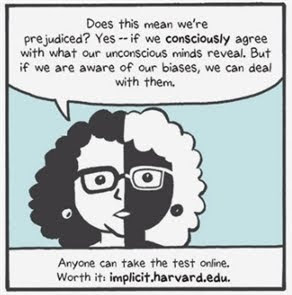
Bias is hard to avoid, but it can be really damaging - leading us to make poor choices without fairly weighing up the facts.
As human beings, we all bring a point of view into the world, and that point of view colors how we learn about and interact with it. This is built up from the moment we are born and will continue to evolve until we die. With that in mind, we should always be aware that we cannot react to anything in a completely objective manner.
That same logic holds true for media. All news outlets are organizations and made up of people. This means that editors, reporters, commentators, and researchers who work in journalism bring their point of view to work with them every day, and it is borderline impossible for them to completely separate themselves from the stories they report. It is therefore logical to assume that even the hardest news will be colored, to a certain extent, by the person reporting it. At a microlevel, when looking at a story, this point of view can manifest itself in a variety of ways that we should be on the lookout for:
Value as fact: In softer news, the presenter might attempt to pass off their beliefs as fact. This is especially true of punditry and opinion sections (think Tucker Carlson, Rachel Maddow, Sean Hannity, or Stephen Colbert) where the presenter is often attempting to confirm their own worldview and make that worldview more presentable to the consumer. If a worldview or set of values is stated, we should automatically be on the lookout for bias in how the story is presented.
Presentation of the facts: In hard news, it’s important to keep an eye on how the facts are presented. Were questions left unanswered? Was information omitted that could have been vital to building a clear picture of events?
Credibility and accuracy of sourcing: Did the story source a diverse array of credible viewpoints and make the effort to flesh out who or what they are and put the information gleaned from them in context? The less you notice this in a story, the more on guard you should be for bias.
Cherry-picking: How are sources represented in the story? Are they analyzed in depth or just at a glance?
Sensationalism: Does the language in the headline or body provoke an emotional response? If it does, it’s likely that you’re consuming something intentionally biased and seeking to elicit that reaction to further the agenda of its author.
Commentary: Does the story draw a specific conclusion? Do they tell you in the presentation of facts whether they judge a source to be credible or portray them in a positive or negative light? In general, we should be skeptical of any reporting that attempts to pass judgement on a source. It may be accurate, but further research will be needed on the part of the consumers to independently confirm this judgement for themselves.
Fighting BIAS can be even harder than detecting it, especially when we already have strong preconceived opinions...
Few reporters proclaim their convictions. Fewer still act on them to serve what they believe to be the greater good. In times of profound moral crisis, most reporters make the 'Great Refusal.' The best lack all conviction while the worst are full of passionate intensity.
In his poem 'Inferno' Dante tours the underworld and sees a swarm of anguished souls barred from heaven and hell doomed to limbo. They are the neutrals, whose lives meant nothing because they refused to commit themselves. They have all made what Dante calls the 'Great Refusal.'
Take theInferno Test to see which level of Hell you would be banished to. Do you agree? Share your comments in our Google Class comments.
In October 2025, Donald Trump jokingly told reporters on Air Force One that he is "not maybe heaven-bound" when asked if his efforts on a Ukraine ceasefire would help him get into heaven, according to KBTX News 3 and this YouTube video. He noted he was "being a little cute" but was not sure he would make it, while later asserting he has done immense good for many people, say this YouTube video.
From now until the NCAA basketball championship in April, experts and prognosticators, along with millions of amateurs
competing in office pools, will attempt to predict the outcomes of all
67 of the tournament’s games.
People have all sorts of reasons to pick one team over another. Some
break down game footage; others look at advanced statistics; and still
others give preference to schools they or their friends attended.
But what if we took a different approach and picked teams based on the strength of their mascots?
Roll out the red carpet! Last night was a big night for Hollywood. The Academy Awards, or "Oscars", is an annual American awards ceremony hosted by the Academy of Motion Picture Arts and Sciences to recognize excellence in cinematic achievements.
After watching these memorable Oscar Speeches, imagine you just won an Oscar for Best Picture, Best Actor/Actress, or Best Director. Write a 1–2 minute acceptance speech (150–250 words). Your speech should include: • A reaction to winning the award • Thanks to at least three people or groups • A short description of the work behind the achievement • A meaningful message for the audience
1. Why do people thank others in acceptance speeches?
2. Why might winners mention family members, teachers, or coworkers?
3. What kinds of messages do people often include in speeches?
4. Why do you think audiences enjoy hearing acceptance speeches?
Citizen Kane was a brutal portrait of newspaper magnate William Randolph Hearst. When Hearst learned through Hopper of Welles' film, he set out to protect his reputation by shutting the film down. Hollywood executives, led by Louis B. Mayer, rallied around Hearst, attempting to buy Citizen Kane in order to burn the negative. At the same time, Hearst's defenders moved to intimidate exhibitors into refusing to show the movie. Threats of blackmail, smears in the newspapers, and FBI investigations were used in the effort.
Mark Twain was a famous American humor writer who often used exaggeration to teach lessons about
human behavior. In the story 'My First Lie and How I Got Out of It,' Twain describes a situation where a
small lie begins to grow bigger and more complicated. Each attempt to fix the lie creates new problems
and confusion. The story humorously shows how difficult it can be to keep track of lies once they start.
1) Why do you think the narrator told the first lie?
2) What happens when the narrator tries to maintain the lie?
3) What lesson do you think Mark Twain is trying to teach?
Welcome to the home page of Mr. Kelly's Current Events class. This course looks at the role of the media on international, national, state, local, and school wide levels. Although the content is constantly changing there are recurrent themes including domestic and foreign policy, the economy, war, crime, and the environment. Here you will find assignments, online discussions, and your grades. Be prepared to keep up with weekly reading assignments and be respectful of each others opinions on this site.